Water Under Sink Cabinet? Don't Ignore These Warning Signs
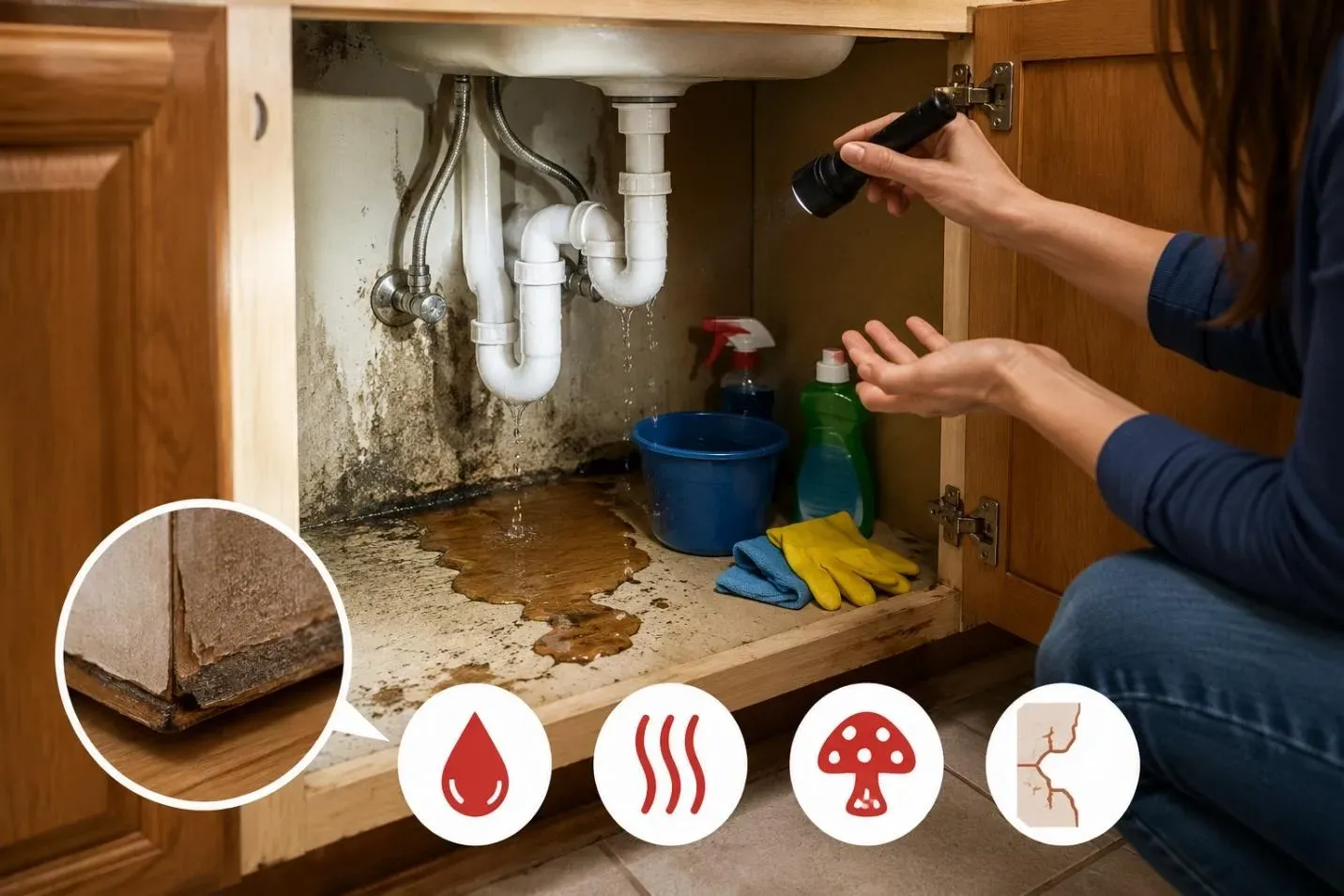
Opening your under-sink cabinet to find a puddle of water is never a welcome surprise. Whether you notice dripping under your kitchen sink or discover water coming from under kitchen cabinets that has been sitting undetected for days, these situations demand prompt attention. At Garot Plumbing & Heating, we have been helping Green Bay, Wisconsin homeowners diagnose and fix leaks under the kitchen sink since 1946. In this guide, we walk you through the most common warning signs, the likely causes, and exactly what to do when water appears where it should not.
Why Water Under Your Kitchen Sink Is a Serious Problem
Many homeowners mistake a
leak under the kitchen sink for a minor nuisance. The reality is that even a slow drip can cause significant damage over time. Persistent moisture inside a cabinet creates the perfect environment for mold and mildew to grow, weakens the cabinet floor and the surrounding wall structure, damages flooring materials beneath the cabinet, attracts pests that are drawn to moisture, and can eventually compromise the subfloor if left unaddressed for weeks or months.
The sooner you identify the source and arrange to repair the leak under the kitchen sink, the less damage your home will sustain and the lower your repair costs will be.
Common Warning Signs You Should Never Ignore
Visible Water Pooling or Dripping
The most obvious sign is water you can see — either pooled on the cabinet floor or actively dripping under your kitchen sink. Do not simply mop it up and close the door. Any visible moisture indicates an active leak that requires investigation and professional repair.
Musty or Mildew Smell
A persistent musty odor coming from under the sink is often the first indicator of a slow leak you have not yet seen. By the time a mildew smell is noticeable, moisture has likely been present long enough to begin promoting mold growth. This is a clear signal that your kitchen sink is leaking underneath and has been doing so for some time.
Warped or Stained Cabinet Floor
Water staining, bubbling, soft spots, or warping on the cabinet floor beneath your sink are signs of ongoing or past moisture exposure. Even if there is no active dripping under your kitchen sink today, these signs indicate a leak that needs professional diagnosis to determine whether damage extends beyond what is visible.
Increased Water Bills
A sudden unexplained increase in your water bill can point to a leak somewhere in your plumbing system, including beneath the kitchen sink. If your usage has not changed but your bill has risen, it is worth investigating all potential leak sources.
Water Coming from Under Kitchen Cabinets
If you notice water coming from under kitchen cabinets — particularly spreading onto your flooring — the leak may be more significant than a simple pipe drip. This could indicate a burst supply line, a heavily corroded drain pipe, or a failing connection between fixtures. This situation calls for immediate professional attention.
What Causes Leaks Under the Kitchen Sink?
Not every home has the luxury of a spacious laundry room. When renovating a small laundry room, prioritize a stacked washer-dryer unit to free up floor space, wall-mounted folding drying racks instead of floor-standing ones, a slimline utility sink if space permits, and recessed shelving within wall cavities where structural conditions allow. Even the smallest laundry closets can be transformed into highly functional spaces with thoughtful planning and professional plumbing work.
Worn or Damaged P-Trap
The P-trap is the curved pipe section beneath your sink that holds water to block sewer gases. Over time, P-trap connections can loosen, and the pipe itself can corrode or crack, especially in older Green Bay homes with aging plumbing. A damaged P-trap is one of the most common causes of a
kitchen sink leaking from the bottom.
Failing Sink Strainer or Drain Seal
The sink strainer is the fitting that connects your sink basin to the drain pipe below. When the putty or rubber gasket seal around the strainer deteriorates, water leaks around the base of the drain fitting every time you use the sink. You may notice water under sink cabinet specifically when water is draining.
Loose or Corroded Supply Lines
The braided supply lines connecting your shut-off valves to the faucet can loosen over time or develop corrosion at the connection points. A dripping under kitchen sink that appears even when the sink is not in use typically points to a supply line issue rather than a drain problem.
Faulty Faucet
A worn faucet body, loose connections, or a failing internal cartridge can allow water to escape at the base of the faucet and drip down into the cabinet below. In some cases, this type of leak is subtle enough to go unnoticed until significant moisture damage has already occurred.
Garbage Disposal Leak
If your kitchen includes a garbage disposal, the connection between the disposal and the drain can develop leaks at the mounting flange, the dishwasher inlet, or the drain outlet. Disposal leaks often appear as kitchen sink leaking underneath the disposal unit itself.
How to Fix a Leak Under the Kitchen Sink: Professional Solutions
Understanding how to fix a leak under the kitchen sink starts with correctly identifying the source. Because leaks can originate from multiple points — the drain, the supply lines, the faucet, the garbage disposal, or the sink itself — a professional diagnosis is the most reliable starting point.
Garot Plumbing & Heating's licensed plumbers in Green Bay approach under-sink leaks by systematically inspecting all potential leak points, identifying the root cause, and providing a clear recommendation before any work begins. Depending on the issue, our solutions include replacing worn P-traps, drain pipes, and slip-joint connections, resealing or replacing sink strainers and basket assemblies, replacing deteriorated or damaged supply lines, repairing or replacing faulty faucets, and addressing garbage disposal connection failures.
Our goal is always to provide a durable fix — not a temporary patch — so you can rely on your kitchen plumbing without worry.
When to Call a Professional vs. DIY
Minor issues like tightening a loose P-trap slip nut are within reach for a confident DIYer. However, most under-sink leaks involve more than meets the eye. You should call a licensed professional when the leak source is not immediately obvious, when there is evidence of mold or structural moisture damage, when supply line or water pressure issues are suspected, when corrosion affects multiple pipe sections, or when repeated DIY attempts have not resolved the problem. Attempting to repair a leak under the kitchen sink without proper diagnosis often leads to additional damage and greater expense.
Conclusion
Water under your sink cabinet is never something to dismiss. Whether you are dealing with active dripping under your kitchen sink, a musty odor that has developed over time, or visible moisture damage inside your cabinet, these are all signs that your plumbing needs professional attention.
Garot Plumbing & Heating has been the trusted partner for Green Bay homeowners since 1946. Our licensed team diagnoses and repairs kitchen sink leaks of every kind, efficiently and with lasting results. Do not let a small leak turn into a major restoration project — contact us today to schedule a professional inspection and get your under-sink plumbing back in reliable working order.
Frequently Asked Questions
How do I find out why my kitchen sink is leaking underneath?
Start by clearing everything out from under the sink and running water to reproduce the leak. Watch carefully to see whether water appears while the faucet runs (suggesting a drain issue) or even when the faucet is off (suggesting a supply line issue). Dry all surfaces with a paper towel, then check the P-trap connections, supply lines, faucet base, and sink strainer systematically. If you cannot identify the source clearly, a licensed plumber can diagnose the issue definitively without guesswork.
Is a dripping under kitchen sink an emergency?
It depends on the severity. A slow drip from a loose P-trap is not an immediate emergency but should be repaired within a few days to prevent mold and cabinet damage. However, water coming from under kitchen cabinets in volume, a burst supply line, or any leak combined with signs of mold or structural damage should be treated urgently. When in doubt, turn off the water supply valve under the sink and call Garot Plumbing & Heating promptly.
Can I repair a leak under the kitchen sink myself?
Simple fixes like tightening a slip-joint connection or replacing a P-trap are manageable for experienced DIYers. However, if the leak involves supply lines, corroded fittings, a faulty faucet body, or any plumbing that connects to the wall, professional repair is strongly recommended. Incorrect repairs can cause new leaks or make the existing problem worse, leading to greater damage and higher costs.
What causes a kitchen sink to leak from the bottom of the drain?
A kitchen sink leaking from the bottom of the drain is most commonly caused by a deteriorated putty seal or rubber gasket around the sink strainer basket. Over time, these seals dry out and crack, allowing water to escape around the drain fitting during use. The fix typically involves removing the strainer, cleaning the area, and resealing with fresh plumber's putty or a new rubber gasket — a job best handled by a licensed plumber for a clean, lasting result.
How much does it cost to fix a leaking sink drain pipe in Green Bay?
The cost to repair a leak under the kitchen sink in Green Bay varies based on the cause and the extent of any damage. Simple P-trap or supply line replacements are generally straightforward and affordable repairs. More complex issues involving corroded drain pipes, faucet replacement, or garbage disposal repairs may cost more. Garot Plumbing & Heating provides upfront pricing before beginning any work, so you always know what to expect.
