Can Old Pipes Handle Your New Bathroom Renovation?
Summary
Planning a bathroom renovation? This blog explains how your existing plumbing can affect your remodeling project. Learn how to identify aging pipes, when replacement may be necessary, and why a professional plumbing inspection can help prevent costly issues and ensure your new bathroom has a reliable plumbing system.
Introduction
A bathroom renovation is one of the most rewarding home improvement projects a Green Bay homeowner can undertake. New tile, a modern vanity, a walk-in shower — the transformation can be remarkable. But beneath all that fresh design lies a question many homeowners overlook until it is too late: can your existing pipes actually support the renovation you have planned? Understanding the relationship between bathroom plumbing renovations and your home's existing pipe infrastructure is essential before demolition begins. At Garot Plumbing & Heating, we have guided Green Bay homeowners through successful bathroom remodels since 1946 — and we know exactly what your pipes need to handle the upgrade.
Why Your Existing Pipes Matter in a Bathroom Renovation
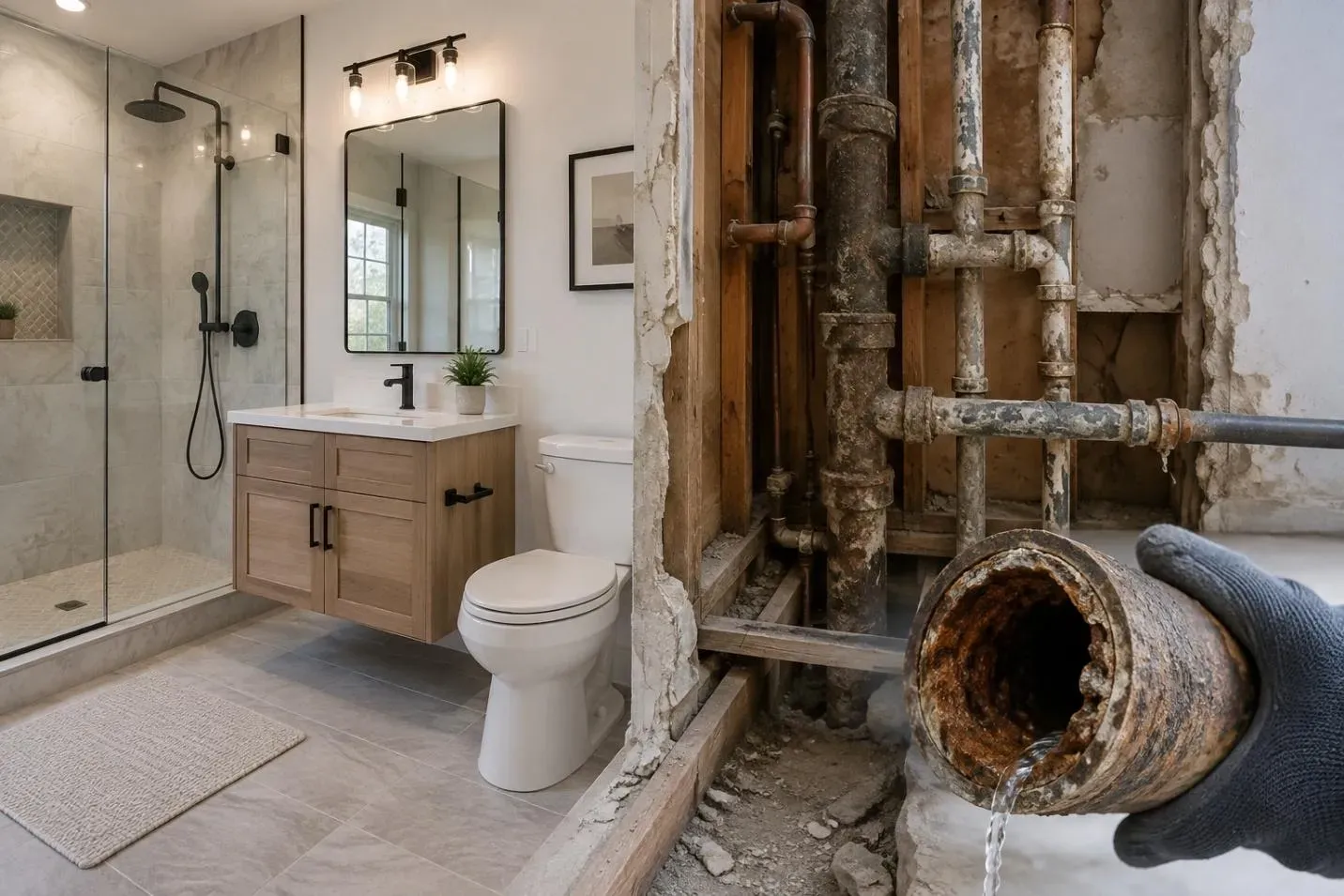
Bathroom plumbing renovations rarely happen in isolation. Even if you are only replacing fixtures in place, your existing supply lines, drain pipes, and vent connections will be directly affected. In older Green Bay homes — particularly those built before the 1970s — the original pipes may be made from materials that were standard at the time but are now considered outdated, unreliable, or incompatible with modern fixtures.
Skipping a pipe assessment before a bathroom remodel and plumbing upgrade can result in leaks behind new tile, failed connections to new fixtures, and costly tear-out of recently completed work. Involving a professional plumber for your bathroom remodel from the very beginning prevents these expensive surprises.
Common Pipe Materials in Older Green Bay Homes
Galvanized Steel Pipes
Galvanized steel was the standard supply pipe material in homes built before the 1960s. Over decades, the zinc coating corrodes from the inside out, leading to restricted water flow, low pressure, rust-colored water, and frequent leaks. Galvanized pipes in a bathroom renovation context are almost always best replaced rather than reused. Attempting bathroom plumbing renovation tips that connect new fixtures to failing galvanized supply lines is a setup for ongoing problems.
Cast Iron and Clay Drain Pipes
Cast iron drain pipes are extremely durable and can last 75 to 100 years when properly maintained. However, they are susceptible to internal corrosion and cracking over time, especially in homes where chemical drain cleaners have been used repeatedly. A professional camera inspection during bathroom remodel and plumbing planning will reveal whether your cast iron drain system can support a new renovation or needs sectional replacement.
Polybutylene Pipes
Homes built between the late 1970s and mid-1990s may have polybutylene supply pipes — a material that was widely used but proved to be prone to failure over time. If your Green Bay home has polybutylene pipes, a bathroom renovation is an ideal time to replace them entirely, as continuing to use them carries ongoing leak risk.
Copper and PEX Pipes
Copper pipes installed in good condition are excellent candidates for supporting a bathroom plumbing renovation, typically lasting 50 years or more. PEX (cross-linked polyethylene), used in newer homes, is flexible, durable, and highly compatible with modern fixture installations. If your home has copper or PEX supply lines in good condition, they can often be extended or connected to new fixtures without full replacement.
Key Bathroom Plumbing Renovation Tips Before You Start
Schedule a Pre-Renovation Pipe Inspection
One of the most important bathroom plumbing renovation tips is to have a
licensed plumber inspect your existing pipe system before any demolition begins. A camera inspection of drain lines and a pressure test of supply lines can reveal hidden corrosion, partial blockages, and structural weaknesses that would otherwise only surface after new materials are in place.
Plan for Pipe Upgrades in Your Renovation Budget
Bathroom renovation plumbing costs are one of the most variable line items in any remodel budget. Simple fixture replacements in place with sound existing pipes cost far less than projects requiring pipe relocation or material replacement. Getting a thorough plumbing assessment upfront allows you to budget realistically for the cost for plumbing a new bathroom layout or pipe upgrade before committing to a full design.
Take Advantage of Open Walls
When walls are already open for a bathroom renovation, the incremental cost of replacing aging pipes behind them is far lower than doing so as a standalone project later. Hiring a professional plumber for renovations at the same time as your contractor means pipes and fixtures are upgraded together, reducing labor costs and avoiding future disruption.
Do Not Move Fixtures Without a Plumber
Relocating a toilet, sink, or shower even a short distance requires rerouting supply and drain lines — a job that must comply with local plumbing codes in Green Bay. Always involve a licensed plumber for bathroom remodel work before finalizing any layout that differs from the existing fixture positions.
When Old Pipes Need to Be Replaced
The decision to replace versus reuse existing pipes depends on material type, condition, and age. In general, pipe replacement during bathroom plumbing renovations is recommended when pipes show visible corrosion, scale buildup, or physical damage, when water pressure is consistently poor in the bathroom, when the material is known to be problematic (galvanized steel, polybutylene), or when repair costs are approaching the cost of replacement. Garot Plumbing & Heating provides honest, transparent assessments — we will always recommend the most cost-effective approach for your specific situation.
Conclusion
A beautiful new bathroom deserves reliable plumbing to match. Before you commit to a design, invest in a professional pipe assessment to understand exactly what your existing infrastructure can support. The right bathroom plumbing renovation approach protects your investment, prevents post-renovation surprises, and ensures your new bathroom performs as well as it looks.
Garot Plumbing & Heating has been the trusted partner for bathroom remodel and plumbing work across Green Bay since 1946. Our licensed plumbers work alongside your renovation team to ensure every pipe, fitting, and fixture is installed correctly and built to last.
Contact us today to schedule your pre-renovation plumbing assessment.
Frequently Asked Questions
Do I always need to replace pipes during a bathroom renovation?
Not always. Pipes in good condition — particularly copper or PEX supply lines and cast iron drains without significant corrosion — can often remain in place and be connected to new fixtures. The key is having a licensed plumber assess their condition before renovations begin. Garot Plumbing & Heating provides thorough pre-renovation inspections to give you a clear picture of what needs to be replaced versus what can be safely reused.
How much do bathroom renovation plumbing costs typically add to a remodel?
Bathroom renovation plumbing costs vary widely based on the scope of work. Simple fixture replacement in existing locations with sound pipes may add only a few hundred dollars in labor. Projects requiring pipe material upgrades, fixture relocation, or new drain and vent installations can add several thousand dollars to the overall budget. Getting a plumbing assessment and quote from Garot Plumbing & Heating before finalizing your renovation plan allows you to budget accurately.
How do I know if my home has polybutylene pipes?
Polybutylene pipes are typically gray in color and may be stamped with 'PB2110' on the pipe surface. They are commonly found in utility areas, under sinks, and behind walls in homes built between approximately 1978 and 1995. If you are unsure whether your Green Bay home has polybutylene plumbing, a licensed plumber can identify the pipe material during an inspection.
Do I need permits for bathroom plumbing renovations in Green Bay?
Yes, in most cases. Any bathroom plumbing renovation that involves changes to supply lines, drain pipes, or vent connections requires a permit in Green Bay, Wisconsin. Simple fixture swaps in the same location may not require a permit, but any relocation of fixtures or pipe material changes typically does. Garot Plumbing & Heating handles all permit applications as part of your renovation plumbing work, ensuring full code compliance.
How long does the plumbing portion of a bathroom renovation take?
The plumbing portion of a bathroom renovation varies significantly based on scope. Fixture replacement with existing connections typically takes one to two days. Projects involving pipe replacement, fixture relocation, or new drain and vent installations may take three to five days or more. Your Garot Plumbing & Heating project plumber will provide a realistic timeline estimate during the initial consultation so your renovation schedule can be planned accordingly.
