
How to Prevent Sump Pump Discharge Lines From Freezing?
Summary
This blog explains how Green Bay homeowners can prevent sump pump discharge lines from freezing during Wisconsin winters. It covers proper installation, adequate burial depth, correct slope, insulation, freeze guards, and keeping discharge outlets clear. The article also provides tips for handling frozen lines and explains when professional help may be needed to prevent basement flooding and sump pump damage.
Introduction
For Green Bay homeowners, a sump pump is a critical line of defence against basement flooding — but it is only effective when the entire system works as intended. One vulnerability that catches many homeowners off guard is a frozen discharge line. Proper
sump pump discharge pipe installation is the foundation of freeze prevention, and understanding how to protect your discharge line through Wisconsin's harsh winters can mean the difference between a dry basement and a costly flood. At Garot Plumbing & Heating, we have been keeping Green Bay homes protected since 1946, and we know exactly what it takes to keep sump pump discharge lines running freely all year long.
Why Sump Pump Discharge Lines Freeze
A sump pump works by collecting water from your sump pit and pumping it through a discharge pipe to a safe location away from your foundation. In winters, that discharge pipe — which carries water through or along cold exterior walls and underground — is highly susceptible to freezing when temperatures drop.
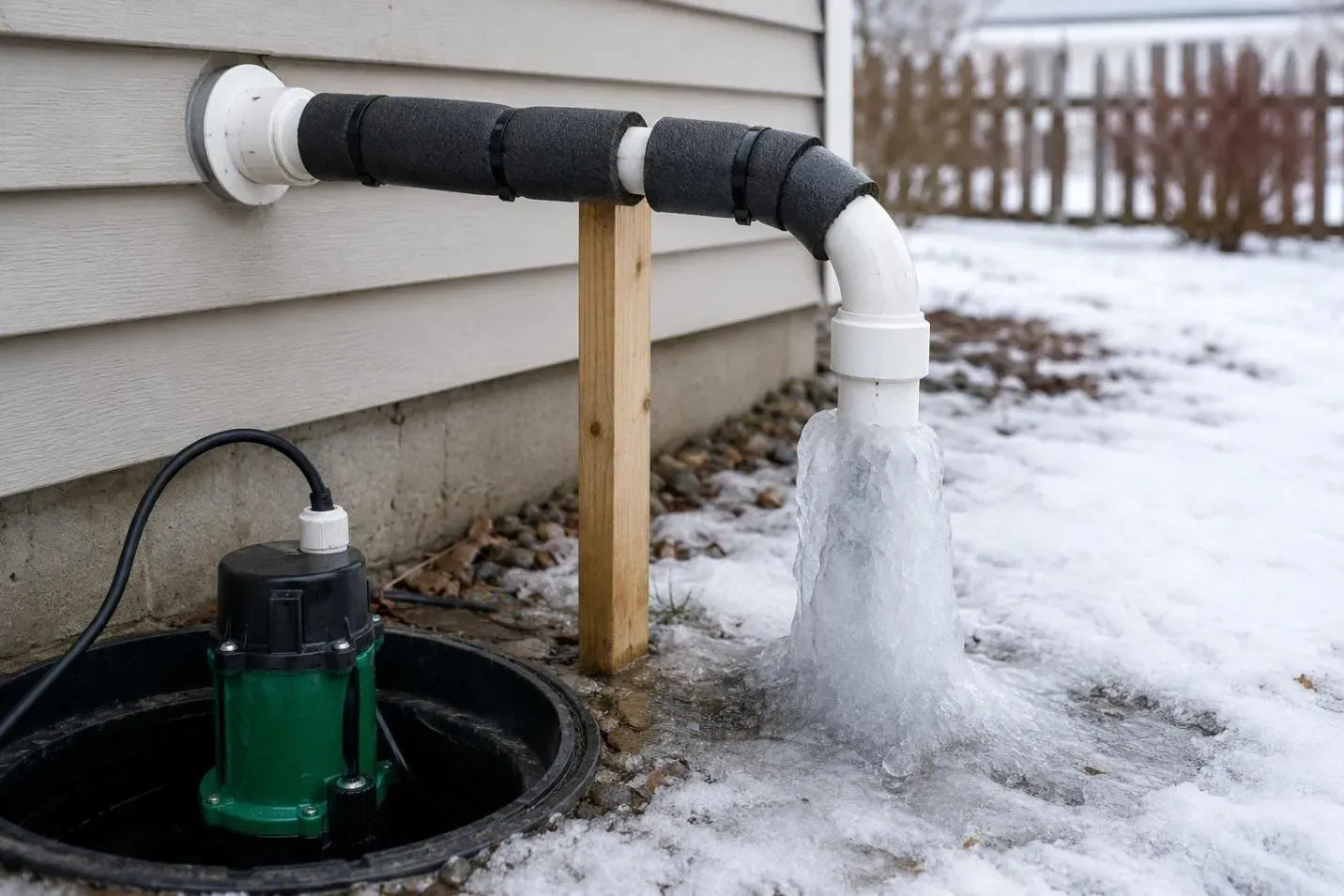
When the discharge line freezes, water cannot exit the system. The pump continues running, strains under the load, and can overheat and burn out — leaving your basement completely unprotected. A frozen discharge line is both a pump-killer and a flood risk.
Freeze Prevention Starts with Proper Sump Pump Discharge Pipe Installation
Bury the Discharge Line Below the Frost Line
The most effective long-term solution for freeze prevention is proper sump pump drain pipe installation that buries the discharge line below the local frost line. In Green Bay, the frost line typically reaches 48 inches or deeper. Knowing how to bury a sump pump discharge pipe correctly — at the right depth, with appropriate slope, and connecting to an approved outlet — requires professional installation.
Underground sump pump discharge line installation protects the pipe from ambient air temperatures and allows water to flow freely regardless of how cold the weather gets above ground. Garot Plumbing & Heating handles full underground sump pump discharge hose installation and underground pipe runs for Green Bay homeowners.
Ensure Proper Slope Throughout the Discharge Line
One of the most important aspects of running sump pump discharge line correctly is maintaining adequate slope — typically at least one inch of drop per eight feet of run. Without proper slope, water sits in low spots within the pipe between pump cycles. That standing water is exactly what freezes and creates blockages. When installing sump pump discharge line, every section must be checked for correct pitch.
Use the Correct Pipe Diameter
Proper sump pump discharge pipe installation uses pipe sized to match the pump's output capacity — typically 1.5 to 2 inches in diameter. Undersized pipe restricts flow and increases the risk of water backing up and freezing. Always match pipe diameter to manufacturer specifications when completing a sump pump discharge hose installation.
Discharge to the Right Location
Where the discharge line terminates matters greatly for freeze prevention. Connecting sump pump discharge to a storm drain is often the most reliable solution — it routes water directly into the municipal storm system, away from your foundation and frost-vulnerable surface areas. Where storm drain connections are not available, the discharge line should terminate at least 10 to 20 feet from the foundation, sloped away from the home, and in a location that will not allow water to pool near the discharge end.
Additional Freeze Prevention Strategies
Install a Freeze Guard or Pop-Up Emitter
A freeze guard is a device installed near the exterior termination of the discharge line that opens an alternate escape path for water if the main discharge freezes. This prevents pump burnout by allowing water to exit at a different point. A pop-up emitter at the discharge end opens under water pressure and closes when flow stops, preventing cold air from traveling back up the pipe and accelerating freezing.
Insulate Exposed Sections
Any section of the how to install a sump pump discharge pipe run that travels through an unheated crawl space, along an exterior wall, or through an uninsulated garage should be insulated with pipe wrap or foam insulation sleeves. While insulation alone will not prevent freezing during extended extreme cold, it significantly slows the rate of heat loss and extends the pipe's protection through shorter cold snaps.
Keep the Discharge End Clear of Snow and Ice
Check your discharge outlet regularly throughout winter. Snow accumulation and ice buildup at the termination point can block outflow just as effectively as a frozen pipe. After major snowfalls, ensure the discharge end is clear and free of ice. If you notice the pump running more frequently than usual without obvious explanation, check the discharge outlet first.
Install a Battery Backup Sump Pump
A battery backup pump will not prevent a discharge line from freezing, but it provides critical protection during the power outages that often accompany Green Bay's worst winter storms. If your primary pump's discharge line freezes and the pump fails, a battery backup system gives you additional time to respond before flooding occurs.
When to Call a Professional
If your sump pump discharge line has already frozen, do not attempt to thaw it with open flame.
Call a licensed plumber immediately. Garot Plumbing & Heating can safely thaw the line and assess whether the installation needs to be reconfigured to prevent refreezing. If your current discharge pipe installation lacks proper slope, burial depth, or a freeze-resistant termination, our team can redesign and reinstall the system correctly.
Conclusion
A sump pump that cannot discharge is a sump pump that cannot protect your home. In Green Bay's climate, freeze-proofing your discharge line is not optional — it is essential. The combination of proper sump pump discharge pipe installation, correct burial depth, adequate slope, and smart termination choices creates a system that works reliably through even the harshest Wisconsin winters.
Garot Plumbing & Heating has been the trusted name in Green Bay plumbing and basement protection since 1946. Whether you need a new sump pump discharge line installation or a freeze-prevention upgrade to your existing system, our licensed team delivers lasting results.
Contact us today to protect your home before the next Wisconsin winter arrives.
Frequently Asked Questions
How deep should a sump pump discharge pipe be buried in Green Bay?
In Green Bay, Wisconsin, the frost line typically reaches 48 inches below grade. For reliable freeze prevention, sump pump drain pipe installation should place the pipe at or below this depth. Shallower burial may work for shorter cold periods but leaves the line vulnerable during extended extreme cold. Garot Plumbing & Heating designs discharge pipe installations to account for local frost depths and soil conditions specific to the Green Bay area.
Can I connect my sump pump discharge to the city storm drain?
Connecting sump pump discharge to a storm drain is allowed in many municipalities but requires checking with your local utility before installation. In Green Bay, storm sewer connections for sump pump discharge may be permitted under specific conditions. Garot Plumbing & Heating can advise you on local requirements and handle the installation if a storm drain connection is the right option for your property.
What should I do if my sump pump discharge line freezes?
If your discharge line freezes, turn off the sump pump immediately to prevent motor burnout from running against a blocked line. Never use an open flame to thaw the pipe — use warm water or a heat cable if safe to do so, or call a licensed plumber. After the line is cleared, have a professional assess whether the installation can be improved to prevent recurrence. Garot Plumbing & Heating provides emergency plumbing services throughout Green Bay.
What is a sump pump freeze guard and do I need one?
A freeze guard is a device installed in the discharge line near the exterior outlet that creates an alternate drainage path if the main pipe freezes. It allows the pump to continue discharging water near the foundation rather than failing entirely. For Green Bay homeowners with above-ground or shallowly buried discharge lines, a freeze guard is a practical and affordable layer of freeze protection that can prevent pump burnout during the coldest nights.
How often should a sump pump discharge line be inspected?
Sump pump discharge lines should be inspected at least twice a year — once in the fall before freezing temperatures arrive and again in spring after the thaw. Inspect the exterior termination for ice or debris blockage, check that the discharge end is discharging water away from the foundation, and listen for any change in the pump's operating sound that might indicate a partial blockage. Garot Plumbing & Heating offers annual sump pump system inspections for Green Bay homeowners as part of comprehensive plumbing maintenance.
