
7 Hidden Places Water Can Remain After a Plumbing Leak
Summary
- Learn about 7 common areas where hidden moisture can remain after a plumbing leak.
- Discover why water can linger inside walls, under floors, behind tiles, and beneath appliances.
- Understand how trapped moisture can contribute to mold growth, structural damage, and indoor air quality issues.
- Find out what homeowners should do after plumbing leak repair to identify and address hidden moisture.
- Explore practical steps to protect your property and prevent costly future repairs.
A plumbing leak that has been repaired is not necessarily a problem that has been fully resolved. Water is extraordinarily persistent; it travels along framing, wicks into porous materials, and settles in spaces you would never think to check. Prompt plumbing leak repair is essential, but so is knowing where to look for water that has already spread beyond the original leak point. At Garot Plumbing & Heating, we have been managing
sink and drain repair at home for Green Bay, Wisconsin residents since 1946, and we know firsthand how many hidden moisture problems go undetected until significant damage has already occurred.
Why Hidden Moisture Is a Serious Problem
Water that remains hidden after a leak does not simply evaporate. In enclosed spaces with limited airflow, it promotes mold and mildew growth within 24 to 48 hours. Over time, it weakens structural materials, causes a musty smell in the house, creates conditions for wood rot, and contributes to long-term indoor air quality problems. Thorough inspection after any plumbing leak repair is not optional, it is essential.
7 Places Water Hides After a Plumbing Leak
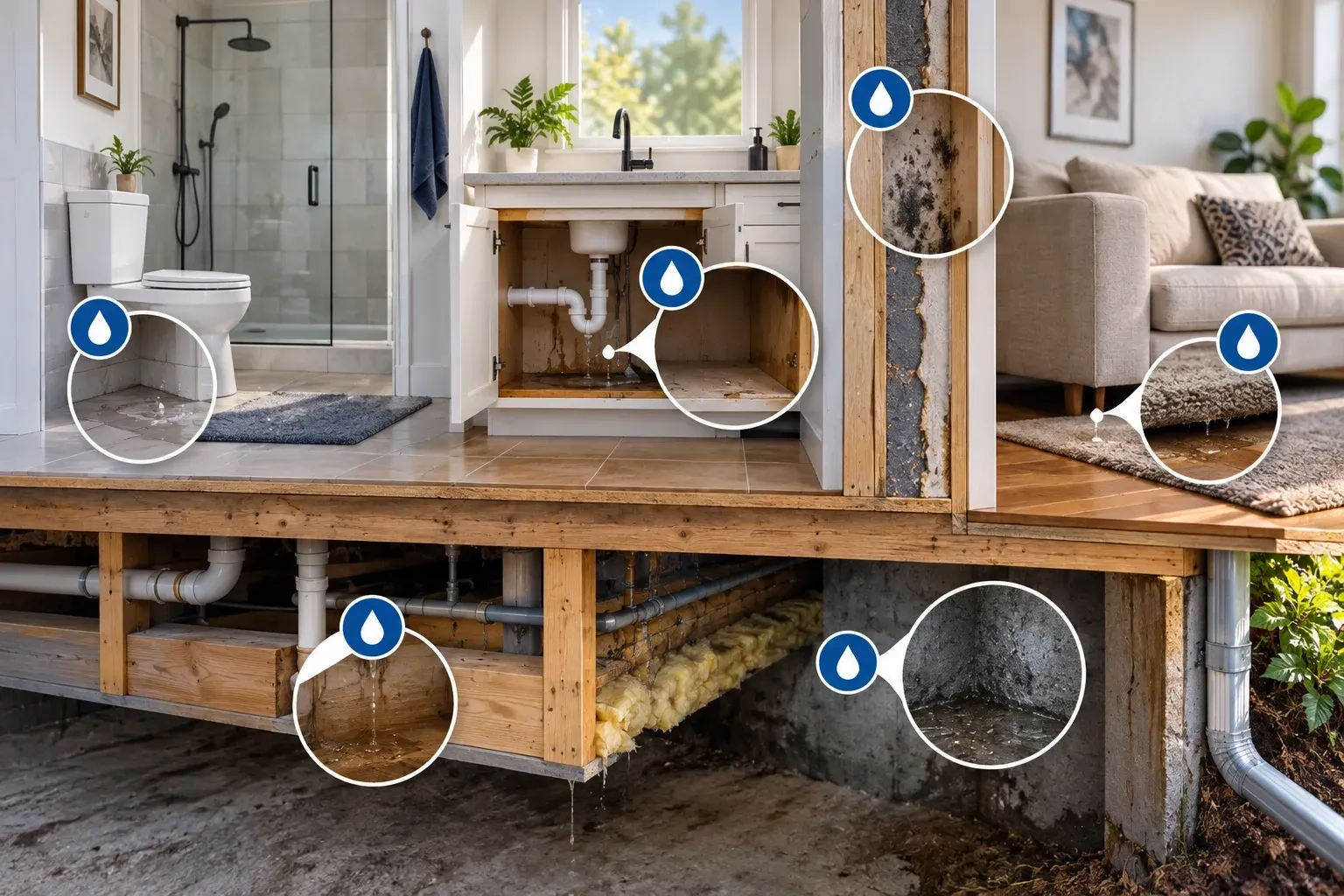
1. Inside Walls Along the Pipe Run
Water from a leaking sink drain or burst supply pipe does not always pool directly below the failure point. It travels along the pipe itself, follows gravity down the interior of the wall cavity, and soaks into insulation, drywall, and wall framing far from the original breach. Even after drain leak repair, the walls adjacent to and below the affected pipe should be checked for moisture using a professional moisture meter.
2. Under the Subfloor
Water that penetrates through finished flooring, particularly at the base of toilets, around shower pans, and beneath kitchen and bathroom sinks can saturate the subfloor extensively before any surface sign appears. Subfloor moisture is one of the most common hidden consequences of sink plumbing failures and is a leading cause of expensive floor replacement projects.
3. Inside Cabinets and Vanity Base Interiors
The interior base of a vanity cabinet or kitchen cabinet beneath the sink is one of the first places to check after any water pipe leak repair. Cabinet floors are often made of particleboard, which absorbs moisture rapidly and begins to swell and deteriorate long before visible staining appears on the outside.
4. Behind Tile and Shower Surrounds
A slow leak behind a tiled shower surround or tub deck can go completely undetected for months. The tile and grout create a false sense of security water infiltrates through hairline cracks in the grout and behind improperly sealed tile edges. Restoration plumbing professionals use thermal imaging and moisture probes to detect saturation behind tile without unnecessary demolition.
5. In Insulation Inside Walls and Ceilings
Fiberglass and foam insulation absorbs and retains moisture efficiently, exactly the opposite of what you want after a leak. Wet insulation loses its thermal performance, provides an ideal environment for mold, and is very slow to dry naturally. After any significant water pipe leak repair, insulation in affected wall and ceiling cavities should be inspected and replaced if saturated.
6. In the Space Between Floors in Multi-Story Homes
In two-story Green Bay homes, a leak on the upper floor can travel through the ceiling structure of the lower floor. Water collects in the joist bays, saturates ceiling drywall from above, and may not present as a visible stain downstairs for days or even weeks. This hidden saturation often produces a musty smell in the house on the lower level long before any visible damage appears.
7. Under Appliances and Fixtures
Dishwashers, washing machines, refrigerators with ice makers, and water heaters all have supply connections that can leak slowly over time. Water collects beneath these heavy appliances where it cannot easily evaporate, causing floor damage, subfloor deterioration, and mold growth that may only be discovered when the appliance is eventually moved. Regular inspection of appliance water connections is an important part of preventing plumbing issues at home from escalating undetected.
What to Do After Plumbing Leak Repair
After any leak repair, take these steps to ensure hidden moisture is identified and addressed:
- Request a moisture survey: A licensed plumber or restoration professional can use non-invasive moisture meters and thermal cameras to map water migration beyond the visible damage area.
- Increase airflow: Run fans and dehumidifiers in affected areas for at least 48 to 72 hours after repair to begin active drying of accessible surfaces.
- Check for musty odor: A persistent musty smell in the house after a repair is a reliable indicator that hidden moisture is still present somewhere in the affected area.
- Inspect adjacent rooms: Water does not always respect the boundaries of a single room check floors, walls, and ceilings in rooms adjacent to and directly below the leak point.
Conclusion
A repaired leak is the beginning of the recovery process, not the end. The seven hidden locations described above account for the majority of post-leak moisture damage seen by plumbing and restoration professionals in Green Bay homes. Thorough moisture assessment after plumbing leak repair protects your home's structural integrity, prevents mold, and avoids the far greater expense of delayed discovery. Garot Plumbing & Heating provides complete leak diagnosis and repair services throughout Green Bay, Wisconsin. If you have recently dealt with a leak or suspect one may be hidden, contact us today for a professional assessment.
Frequently Asked Questions
1. How long does it take for mold to grow after a plumbing leak?
Mold can begin to develop within 24 to 48 hours of moisture exposure in a confined, poorly ventilated space. This is why prompt plumbing leak repair combined with immediate drying efforts is so critical. Waiting even a few days to address a known leak significantly increases the risk of mold colonization in wall cavities, under flooring, and in insulation.
2. What causes a musty smell in the house after a plumbing repair?
A musty smell that persists after a drain leak repair or water pipe leak repair typically indicates that moisture remains trapped in an enclosed space, most commonly inside wall cavities, under flooring, or within insulation. The odor is produced by mold and mildew that have begun growing on wet organic materials. Professional moisture testing is the most reliable way to locate and quantify hidden saturation.
3. How can I tell if water has reached the subfloor?
Common signs of subfloor water damage include soft or springy spots when you walk across the floor, visible buckling or warping of finished flooring, a musty odor at floor level, and tile that has become loose or cracked without an obvious cause. In severe cases, the floor surface may visibly sag in affected areas. A plumber or restoration specialist can confirm subfloor saturation using moisture probes.
4. Is sink plumbing repair covered by homeowners insurance in Green Bay?
Coverage depends on your specific policy and the cause of the leak. Most standard homeowners insurance policies cover sudden and accidental water damage from a burst pipe or failed supply line but typically exclude damage from slow, ongoing leaks that were not promptly reported and repaired. Keeping records of plumbing maintenance and reporting leaks promptly improves your position when filing a claim. Garot Plumbing & Heating can provide documentation of the repair for insurance purposes.
5. When should I call a restoration company in addition to a plumber after a leak?
If water has spread beyond the immediate area of the leak into walls, flooring, or ceilings, or if moisture is present 24 to 48 hours after the plumbing leak repair, a water damage restoration company should be engaged alongside or immediately after the plumber. Restoration plumbing and water mitigation companies have specialized drying equipment, industrial dehumidifiers, air movers, and desiccant systems that are far more effective than household fans for removing moisture from enclosed structural spaces.
